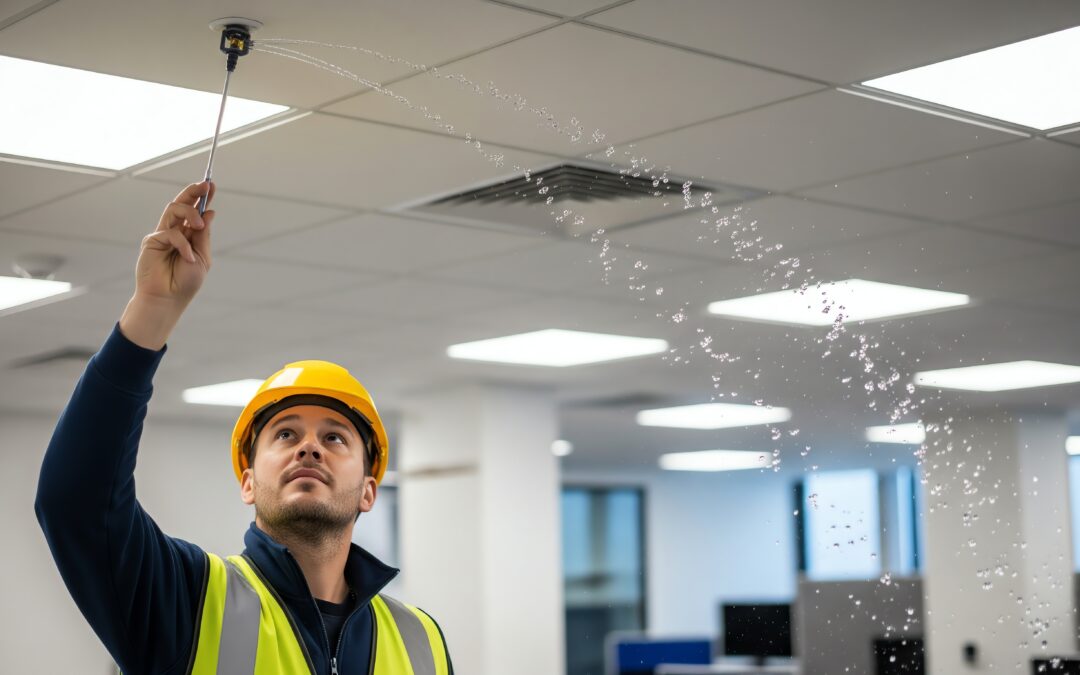
A clear fire sprinkler inspection program keeps commercial buildings compliant and reduces downtime.
In Goshen, Indiana, fire sprinkler inspection should follow NFPA 25-based inspection, testing, and maintenance schedules. Local AHJ direction also helps keep risers, valves, and alarm devices operational and audit-ready.
Key Takeaways
- Follow NFPA 25 inspection, testing, and maintenance intervals, including monthly, quarterly, annual, and multi-year requirements.
- Establish written impairment procedures and notify the authority having jurisdiction when systems are out of service.
- Maintain signed inspection reports and visible inspection tags on risers and control valves.
- Record measurable data, such as main drain residual pressure, to create a defensible compliance trail.
- Coordinate shutdown sequencing and testing windows to reduce operational disruption and false dispatches.
ITM Schedules and Required Inspections
These inspection, testing, and maintenance intervals form the foundation of sprinkler compliance in Indiana. Requirements are based on NFPA 25, which outlines minimum inspection and testing frequencies for water-based fire protection systems.
Each interval verifies water supply, valve integrity, and alarm performance. These inspections often work alongside integrated systems, such as monitoring and security services.
Monthly Visual Inspections and Basic Checks
Monthly visual inspections focus on sprinkler riser rooms, visible pressure gauges, and control valve positions. During a fire sprinkler inspection at a Goshen commercial facility, we confirm that the main control valve is fully open and compare gauge readings for any unusual variance.
We also initial the riser inspection tag with the inspection date and technician initials. These reviews may coincide with checks of related life-safety infrastructure, such as access control systems that secure mechanical rooms and fire riser spaces.
Quarterly and Periodic Tests Commonly Performed
Quarterly testing includes exercising supervisory switches and testing waterflow alarm devices. Certain control valves are also operated to confirm full travel.
A fire sprinkler inspection documents valve exercise results and any abnormal resistance. This documentation helps facilities managers address issues before they become failed annual tests or emergency impairments. In some facilities, commercial camera systems support valve room documentation before and after testing.
Periodic testing may include inspection of fire department connections. Ensuring caps, threads, and check valves are intact supports reliable fire department operations during an emergency.
Annual Full System Inspection and Main Drain Test
An annual fire sprinkler inspection includes a visual survey of accessible piping, hangers, fittings, and sprinkler heads. A main drain test measures residual pressure and flow.
Baseline and current readings are recorded on the inspection report. These measurable results support compliance reviews with the local AHJ in Goshen.
Many facilities align sprinkler ITM with broader fire safety services, planning to maintain coordinated life-safety documentation.
Impairment Procedures and AHJ Coordination
System impairments introduce elevated risk and require structured oversight. Guidance from the U.S. Fire Administration emphasizes documented communication and temporary protective measures. A written impairment plan should define notification steps, mitigation measures, and restoration verification.
Facilities in Goshen, Indiana, should maintain current contact information for the AHJ and monitoring provider to support safe, compliant testing and maintenance activities.
Planned Impairments: Notifications and Temporary Measures
When a planned impairment is required, a written procedure should mandate advance notification to stakeholders and, when required, the AHJ. Post clear “sprinklers out of service” signage during the outage and implement a documented fire watch until full restoration.
In mixed-use properties, confirm that connected building technologies remain properly configured during the impairment.
Emergency Impairments: Rapid Response and Mitigation
If an emergency impairment occurs from valve closure, damage, or a major leak, isolate the affected zone immediately and record the exact outage time.
Notify the facility safety lead and implement temporary risk-mitigation measures, such as positioning portable extinguishers. Guidance in the NFPA Journal reinforces the importance of rapid documentation and restoration.
AHJ Coordination and Restoration Documentation
For extended impairments or major testing events, coordinate early with the authority having jurisdiction and determine whether written notice or a permit is required.
After restoring service, verify valve positions, retest alarm devices, document the restoration time, and update the riser inspection tag. Keep the post-impairment report with annual inspection records for future audits.
Schedule Your Commercial Fire Sprinkler Inspection
For commercial property owners and facilities managers in Goshen, Indiana, maintaining documented compliance reduces liability exposure and supports smoother insurance and AHJ reviews. M&M Fire Protection and Security serves commercial facilities throughout Northern Indiana and Southern Michigan.
To review your inspection schedule or confirm compliance intervals, contact us.
Frequently Asked Questions
How often must commercial sprinklers be inspected in Indiana?
Inspection frequency follows NFPA 25 intervals, including monthly visual checks, quarterly testing, annual inspections, and multi-year internal examinations. Confirm adopted intervals with your local AHJ in Goshen and retain written documentation for each inspection event.
What is a 5-year fire sprinkler inspection?
A 5-year inspection involves internal examination of specific valves or piping to check for corrosion or obstruction. Contractors document which components were opened, the inspection method used, and any corrective action taken.
Who should be notified during a sprinkler system impairment?
Notify the facility safety lead, property management, and the authority having jurisdiction when an impairment affects critical coverage. Clear notification supports coordinated emergency response and reduces confusion during a temporary loss of protection.
What information should inspection tags show?
An inspection tag should list the riser or zone inspected, the inspection date, the technician’s initials or company identifier, and a note if the system was out of service or repairs began.
How much does a commercial fire sprinkler system inspection typically cost?
Inspection cost depends on building size, number of risers, system type, and required testing scope. Request an itemized proposal aligned with NFPA 25 intervals to ensure the scope matches your facility’s compliance requirements.