
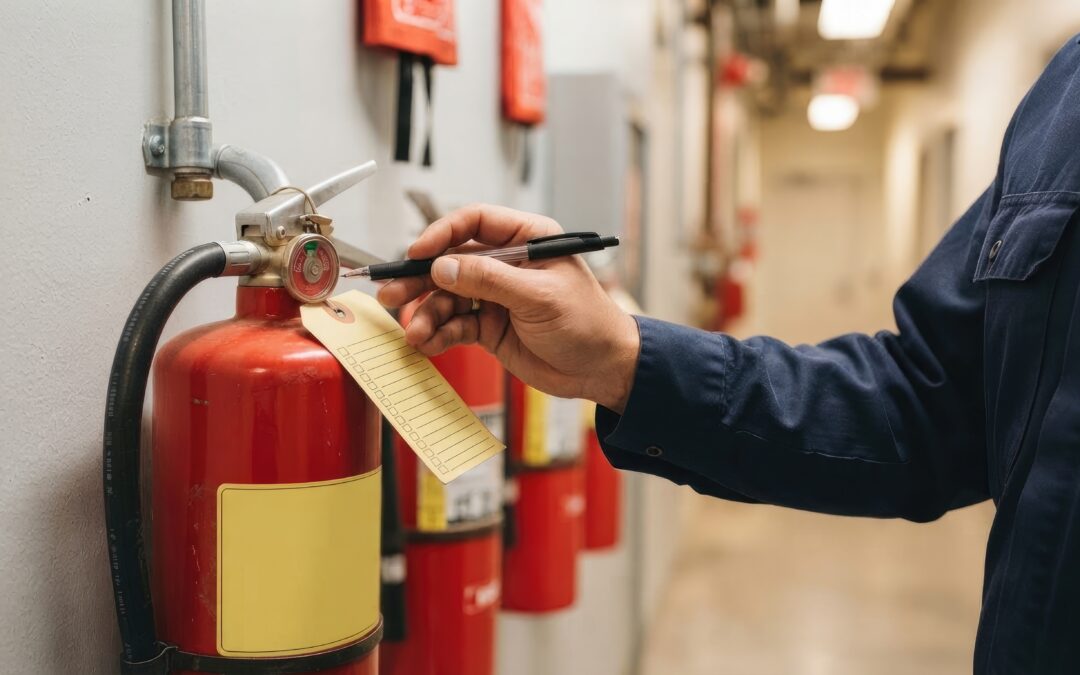
Fire extinguishers protect your building only when they are properly maintained and ready to operate. For facility managers in Goshen, Indiana, and throughout the Michiana region, knowing when fire extinguisher service, recharge, or replacement is needed can prevent problems. Proper maintenance also helps keep equipment ready before an inspection or emergency.
Key Takeaways
- A yearly inspection does not replace other maintenance required by the extinguisher type and service history.
- Pressure loss, cylinder damage, discharge, and overdue service dates are common signs a fire extinguisher needs service.
- Rechargeable, stored-pressure extinguishers may require six-year internal maintenance and periodic hydrostatic testing based on the applicable schedule.
- Disposable and damaged fire extinguishers may require replacement instead of recharge.
Signs Your Fire Extinguisher Needs Service or Replacement
Some problems are easy to spot during a routine walkthrough. Others depend on the extinguisher’s service history, construction, and testing schedule. Facility managers should review both the physical condition and maintenance records. These checks should be part of an overall fire safety program.
The Pressure Gauge Needle Is Outside the Green Zone
A pressure gauge outside the normal operating range can indicate a stored-pressure extinguisher needs professional attention. During routine facility checks in Goshen and throughout Michiana, staff should note abnormal gauge readings. Arrange for the affected unit to be evaluated rather than assuming it remains ready for use.
The Service Tag Shows an Overdue Six-Year Date
Certain rechargeable, stored-pressure dry-chemical extinguishers that require a 12-year hydrostatic test also require six-year maintenance. The OSHA portable fire extinguisher requirements specify this interval for applicable workplace extinguishers.
A unit can appear undamaged and still be due for maintenance. Facility managers should review service records instead of relying only on the gauge or annual inspection tag.
The Extinguisher Is Approaching Its Twelve-Year Hydrostatic Test Date
Many stored-pressure dry-chemical extinguishers are subject to a 12-year hydrostatic-testing interval. However, fire extinguisher hydrostatic testing schedules vary by extinguisher type.
The NFPA 10 identifies different maintenance and testing intervals according to extinguisher type. Facility managers should review the unit’s manufacturing and service information. Qualified personnel can then confirm the correct testing interval for each extinguisher.
Visible Corrosion, Dents, or Damage on the Cylinder
Corrosion, dents, cracks, or other physical damage can affect a pressurized extinguisher cylinder. A questionable unit should be evaluated by qualified personnel rather than automatically recharged.
This step is especially important in commercial environments with demanding operating conditions. Extinguishers may be exposed to moisture, chemicals, impacts, or other conditions that affect their serviceability.
The Extinguisher Has a Plastic Head or Valve Assembly
Some disposable fire extinguishers use construction that is not intended for routine recharge. Because extinguisher designs vary, facility teams should identify which units are rechargeable. They should also know which units require replacement after use or at the end of their permitted service life. This distinction makes the fire extinguisher maintenance schedule easier to manage.
The Unit Was Discharged, Even Partially
A fire extinguisher that has been used should not simply return to its mounting location. Even a partial discharge can reduce the available extinguishing agent or affect pressure.
The unit should be removed from normal service and evaluated for recharge or replacement. This evaluation should occur before anyone relies on the extinguisher again.
The Extinguisher Type No Longer Matches the Hazard Class of the Space
Facility hazards can change when equipment, processes, kitchens, storage areas, or building layouts are modified. An extinguisher appropriate for the original space may not remain appropriate after those changes.
Commercial property managers should review extinguisher selection and placement when hazards within an area materially change.
What to Do When an Extinguisher Needs Attention
Finding a problem is only the first step. The next priority is maintaining appropriate fire protection while the extinguisher receives evaluation, service, or replacement. A consistent process also helps facility teams respond quickly when they notice signs a fire extinguisher needs service.
Pull the Unit From Service and Tag It
An extinguisher with damage, abnormal pressure, or questionable readiness should not remain available as fully functional equipment. Follow the facility’s fire-safety procedures for removing or identifying the affected unit.
OSHA requires alternate equivalent protection when workplace extinguishers are removed for maintenance or recharging. Required coverage should therefore remain available while service is completed.
Confirm Whether Recharge or Replacement Applies
Recharge may be appropriate for a serviceable, rechargeable extinguisher after use or maintenance. Disposable units may require replacement instead. Extinguishers that cannot safely pass required inspection or testing may also need replacement.
When deciding when to recharge a fire extinguisher, consider its type, condition, and maintenance history. Qualified service personnel should make the final determination.
Schedule Certified Technician Service
Internal maintenance, recharge, and hydrostatic testing involve more than checking an exterior gauge. Service may require discharging the extinguisher and examining internal components.
It can also include replacing serviceable parts, testing the cylinder, and restoring the unit. The work should follow applicable requirements and manufacturer instructions.
Update Your Compliance Records After Service
After maintenance, keep the extinguisher’s service information current. Retain facility records that make future maintenance dates easier to track. Commercial properties with extinguishers across multiple floors or buildings can benefit from a detailed inventory. Records can identify each unit, its location, type, and relevant service history.
Address Compliance Gaps Before an Inspection Deadline
Waiting for a scheduled building inspection to discover overdue maintenance can create unnecessary pressure for facility teams. Periodic record reviews make it easier to identify units approaching service milestones.
Teams can then schedule work in advance. This approach is especially useful at larger Michiana facilities with many extinguishers to manage.
Plan Ahead for Seasonal and Occupancy Changes
Changes in production, commercial kitchen activity, heating use, staffing, or building occupancy can prompt an extinguisher review. For businesses in Goshen and across the Michiana region, regular planning can simplify maintenance throughout the year. Review extinguisher locations and service records whenever building operations or hazards significantly change.
Stay Ahead of Fire Extinguisher Compliance Deadlines
Fire extinguisher readiness involves more than checking whether a unit is still hanging on the wall. Service history, physical condition, extinguisher type, and applicable maintenance intervals all affect when to service a fire extinguisher. These factors also help determine when to replace a fire extinguisher instead of recharging it.
M&M Fire Protection and Security works with commercial properties throughout Northern Indiana and Southern Michigan on fire extinguisher maintenance, recharge, and replacement needs.
Contact us to have your equipment reviewed and determine the appropriate next step.
Frequently Asked Questions
Is it cheaper to recharge or replace a fire extinguisher?
The answer depends on the extinguisher’s type, condition, size, and service requirements. A serviceable, rechargeable unit may be suitable for recharge. Disposable or damaged extinguishers may require replacement. A technician can determine the appropriate option after evaluating the unit.
Should I refill or replace my fire extinguisher?
Recharge may be appropriate for a rechargeable extinguisher that remains serviceable after use or maintenance. Replacement may be necessary for disposable units or extinguishers that fail required inspection or testing. The correct choice depends on the extinguisher and its condition.
Do fire extinguishers need to be replaced or serviced?
Fire extinguishers may require inspection, maintenance, recharge, hydrostatic testing, or eventual replacement. Requirements depend on the extinguisher’s design and condition. Facility managers should track each unit’s service history and follow applicable requirements and manufacturer instructions.
Will the fire department recharge my fire extinguisher?
Recharge services vary by community, so facility managers should confirm local availability. Commercial extinguisher recharge and maintenance are commonly handled by qualified fire-protection service providers with equipment for servicing specific extinguisher types.